Blog Archive

Showing posts sorted by relevance for query on a moroccan table. Sort by date Show all posts

Tuesday, December 14, 2010

On a Moroccan Table

Flowers, always flowers...everywhere


On A Moroccan Table
by Victoria Challancin

Morocco is a land of embellishments.  Everywhere you look, life is visually enhanced.  Nowhere is it more true than on the dining tables where you never know what will delight you:  a few scattered flowers, a hand-embroidered tablecloth, a lei of roses, Arabic writing (my Arabic is just good enough to delight in deciphering the letters!), fresh crusty bread, a handful of olives, that unique triumvirate of Moroccan spices lovingly displayed (salt, pepper, ground cumin), or a simple glass of cold, crispy wine surrounded by tempting dishes...you just never know.  But you do know that whatever you find, your senses will be delighted.


Normally, I have a distrust of rosé wines, but I discovered a lovely crispy dry one in Morocco...perfect with this soup, served on a hand-embroidered tablecloth in a favorite riad in Marrakech...


And if you are lucky to pass through the Valley of Roses, somehow a lei of roses just follows you around...from the car, to the room, to the table... 


Yes, these make me happy...for silly reasons, I'm sure...


Delicious bread, freshly made, always on the table, ready to sop up those unbelievable Moroccan flavors...


Oil-cured olives and the ever-present triple condiment of spices:  Salt, Black Pepper, and Cumin...soooo Moroccan...


And yet another version...


Salt, Black Pepper, and Cumin...yet again...this time in Fès at my favorite riad there...and that same rosé wine


If you enjoyed this post on food in Morocco, try the following:


Cooking at the Kasbah:  A Cooking Class at La Maison Arabe


A Moroccan Picnic:  First, the Shopping


A Moroccan Picnic:  And Then the Food


Or go to my Travel Blog Index at the top of the Page and find articles on:  Moroccan Ingredients, the Moroccan Olive Harvest, the Roses of Morocco, Moroccan Salads...and more...so much more...


Or better yet, join me this Spring for a Small Group Journey through enchanting Morocco.  Contact Victoria Challancin here:


flavorsofthesun@gmail.com


Happy Holidays!

Victoria Challancin
Flavors of the Sun International Cooking School
San Miguel de Allende, México

©Victoria Challancin  All Rights Reserved.

Monday, June 8, 2015

A Yearly Cooking Class at La Maison Arabe--with a Recipe!


A Yearly Cooking Class at La Maison Arabe--with a Recipe!
by Victoria Challancin

I'm back!  I'll spare you the apologies, the whinging, the explanations, but I do hope I have returned to the world of blogging after a lengthy absence.  Happily so!

Many of my readers know that I lead small groups to Morocco each year.  Some of you might ask exactly "why?"  I posted a simple explanation, yet in my eyes, a perfect explanation, in a sort of photo essay in 2010 and I don't think I can improve on the sentiments I expressed there.

Why Visit Morocco--please check it out and see if helps you understand my love of this culture, country, and its wonderful people.


Although my tours are not culinary tours, as a part of our itinerary on the trips I lead, we take a cooking class at the spectacular luxury riad (really, this is a boutique hotel) La Maison Arabe, which offers its cooking workshops in private gardens just fifteen minutes outside of Marrakech.  Complete with an organic kitchen garden, an outdoor wood-fired bread oven, and a thoroughly modern cooking school which has 16 individual work stations--each equipped with a closed-circuit screen, the hotel has created a perfect cooking school.  And yes, I admit to being just a tad envious... From the comfort of his or her own station, the participants can watch the dada, or traditional Moroccan family cook, who might be descended from Sub-Saharan slaves or who at least holds a place of respect as the family cook, as she leads us at a brisk pace through our cooking journey.

The Physical Space


Terra cotta tajines used to prepare individual portions and an array of the most common spices used in Moroccan cooking

Two adjacent cooking stations with plastic-covered chicken ready to be prepared


Older Posts on Moroccan Cooking
Cooking at the Kasbah:  A Cooking Class at La Maison Arabe (the original cooking school)

Olives, Preserved Lemons, and a Moroccan Tagine--plus a terrific recipe for a Chicken Tagine with Green Olives

On a Moroccan Table--general info about Moroccan food


The Food and Our Menu

Here we participate in the making of a bread called tanourt, or tannour, baked in an oven also called a tannour (probably from  the Hindi "tandoor").  After we prepare it, we are shown how to make traditional Moroccan mint tea.  And of course, we blissfully eat the warm bread with olive oil, argan oil, and amlou, a delicious Moroccan dip made from toasted almonds, argan oil, and honey.  Unfortunately, most of my photos of this were mysteriously deleted (along with 1500 others) from my camera when I tried to put them on my desktop Mac.  Argh...

I always proudly write my name on the name tag in my child-like Arabic, which always elicits a smile from the locals--and not a small amount of surprise

Our main dish, individually prepared:  Tagine M'darble 

Our main dish with two side salads:  Tatouka and Zalouk

This particular dish is rich, with an unctuous sauce sizzling with gentle spices plus the depth of the caramelized onions.  And it is really, really simple to prepare.  One of the things that fascinates me about much of Moroccan cooking that you often don't sauté the chicken or meats at all; rather they are braised in a simple water-based sauce redolent with simple spices.  This technique couldn't be easier!

Recipe:  Tagine M'darble
(Recipe from La Maison Arabe's cookbook, Moroccan Cooking:   Our Dadas' Recipes)

For the chicken:
500g/1lb chicken pieces (boneless breasts or legs/thighs with bones)
1 large onion, finely chopped
1 small bouquet garni of parsley and cilantro
1 tablespoon olive oil
1 tablespoon vegetable oil
Water
1 teaspoon salt
1/2 teaspoon black pepper
1 teaspoon ground ginger
1 teaspoon ground turmeric
1 teaspoon ground cinnamon
A pinch of saffron threads

For the Caramelized Tomatoes:
2 kg (4.5 lbs) tomatoes
1 lb/500g white sugar
1 teaspoon vegetable oil
1/2 teaspoon ground cinnamon
A pinch of salt

Garnish:  Toasted sesame seeds

To prepare the chicken:  
Drizzle the olive and vegetable oil in a tagine, casserole, or large heavy pot.  Add the chicken, the spices for the chicken, and 1/4 cup of water.  Mix well

Add the finely chopped onion to the pot.  Cover the pot and cook the chicken on low heat for 15 minutes.  Turn the chicken over from time to time and add a bit of water if necessary.

Add 1/2 cup cold water and the bouquet garni of parsley and cilantro.   Cover, increase the heat to medium high, and bring to a boil.  Cook, covered, for 30 minutes or until the chicken is very tender.  Check from time to time and add water if the dish seems too dry.  There should always be a cup of sauce in the pan.

Once the chicken is done, uncover the pot, and continue cooking for a few minutes, until the sauce slightly thickens.

Note:  before serving, remove and discard the bouquet garni of parsley and cilantro

To prepare the tomatoes:
Cut the tomatoes in half and remove the seeds.  Grate the tomatoes on a box grater  and discard the skin.  Place the tomatoes in a large saucepan.  On low heat, cook the tomatoes, covered, for 15 minutes.  

Add the vegetable oil, sugar, cinnamon, and salt to the tomatoes.  Mix well.

Cook uncovered on low heat until the tomatoes become caramelized and thick, 45 minutes to 1 hour.  Stir from time to time.

To serve:  Place the chicken on a dish (or leave it in a tagine, if using), top with some of the sauce from the chicken, Add a dollop of the caramelized tomatoes, and finish by sprinkling with toasted sesame seeds.

Variation:  
Replace the tomatoes with pumpkin.  Wrap the pumpkin pieces with plastic wrap and microwave them for 15 minutes or until they become soft.  Caramelize the pumpkin following the same directions as for the tomatoes.


The wine tasting is optional, but I ask you:  Would I miss that???? Moroccan wines are phenomenal.  


Although we students didn't actually prepare this dessert of millefeulle with pastry cream, orange blossom water, almonds, and a phyllo-type dough, we happily enjoyed it.  The recipe calls it "Milk Pastilla"


Note:  As I come kicking and screaming into the world of social media, I am happy to say that many of my photos from this trip can be seen on Instagram (vchallancin) or my new Flavors of the Sun Facebook page...a work in progress as I learn the ropes!


My Tours to Morocco:
Come join me for my 16-day tour of Morocco in October or next April!  (The next tour will be my twelfth to lead there!)


Parting Shot:  
A sideways photo of favorite tagines in the souk, too heavy to bring home


Victoria Challancin

Flavors of the Sun Cooking School and Tours
San Miguel de Allende, Mexico

©Victoria Challancin.  All Rights Reserved.


Monday, May 27, 2013

Moroccan Textures and a Recipe

 Beet Hummus with Black Tahini and Cinnamon-Pear Balsamic Vinegar

Moroccan Textures and a Recipe for Beet Hummus with Black Tahini and Cinnamon-Pear Balsamic Vinegar
by Victoria Challancin

Note:  If you would like to be on my mailing list for information about my next Moroccan tour, email me at flavorsofthesun@gmail.com.  Thanks!

 Making black tahini in the blender

For a dinner I made on Friday for visiting friends, I featured 9 Moroccan salads, including this interloper: beet hummus.  While not Moroccan at all, it blended with the other flavors beautifully, making it a perfect addition to the general panoply of dishes featuring a small portion of the myriad salads found on the Moroccan table (more on this soon, I promise).  This dish was a stand-out and a favorite with everyone.

I first encountered a recipe for beet hummus on Serious Eats.  Intrigued with a recipe that included three of my favorite ingredients, beets, chickpeas, and tahini, I knew I had to try it.  When I discovered that it included black tahini, something totally new to me, the deal was clinched.  Having just purchased a wickedly delicious cinnamon-pear balsamic vinegar from San Miguel's Olio Fino, which features olive oils and balsamic vinegars with staggeringly fascinating flavors, I thought it would be a perfect addition to the hummus, and it was!  Utterly delicious... Also, for more information on hummus, check out the post where I explain in depth the mystery of this oft-maligned and misused term (it includes a great recipe for a hummus platter as well).

When a special friend requested that I post this recipe as the first of many from Moroccan menu, how could I resist?  For you, E.

Recipe:  Black Tahini
(Recipe adapted from Serious Eats)
Cook's Notes:  The original recipe calls for 1 cup black sesame seeds to 2 tablespoons oil.  I found that the seeds I used required at least double the amount of oil plus a good pinch of kosher salt to give it the taste I was looking for.  This is truly a recipe that requires tweaking.  Because the seeds are black, you have to rely on your ose to tell when the seeds are sufficiently toasted, but it should only take about one minute.

1 cup black sesame seeds
3 to 5 tablespoons extra-virgin olive oil
A large pinch of kosher salt

Place the sesame seeds in a dry skillet over medium heat.  Toast, stirring constantly until fragrant, being careful not to burn them.

Transfer the sesame seeds to a blender.  Begin with 2 tablespoons of olive oil, adding it slowly.  Add additional olive oil until you have the desired consistency, which is thick and creamy.  Add salt and blend again.  Adjust, adding more oil or salt, as required.

Recipe:  Beet Hummus with Cinnamon-Pear Balsamic Vinegar
(Recipe adapted from Serious Eats)
Cook's Notes:  I used a delicious specialty balsamic vinegar, though regular would work fine.  Fig balsamic would also be particularly nice.  Looking for a sharp spicy hummus, I umphed the amount of tahini, garlic cumin as well, but this is completely a matter of taste.  I also boiled the beets due to time, but roasting would yield a more complex flavor.  As with the black tahini recipe itself, this one requires tweaking until you are happy with the balance of flavors.  Even with the additional amounts I used, this dish was surprisingly mellow and gently flavored.  Check the original recipe for a starting place and then play with it, as I did.

4 medium beets ( about 1 lb), cooked, peeled, and cubed
1 (15-ounce can chickpeas, drained and rinsed
1 1/2 teaspoons cumin seeds, toasted and ground
2 tablespoons black tahini (or substitute regular tahini)
3 tablespoons fresh lemon juice
2 tablespoons Cinnamon-Pear Balsamic Vinegar or other balsamic viengar
1 large garlic clove, minced or pressed
4 tablespoons extra-virgin olive oil, plus additional as needed
Kosher salt to taste
Mint or chopped parsley to garnish

Place beets, chickpeas, cumin, tahini, lemon juice, vinegar, and garlic in the bowl of a food processor. Process until smooth.  With machine running, slowly drizzle in olive oil, additional oil if needed.  Season with salt to taste. Serve, drizzling with extra olive oil and a mint sprig or chopped parsley.

Serve with crusty bread, pita, or pita chips.


Moroccan Textures:
Morocco is truly a marvel at every conceivable level:  the gentle people, the rich culture, the food (OMG, the food), the colors, the smells, the textures.  Endlessly varied, it is an assault to the senses everywhere you turn.  In my last post I offered you a few colors...today I give you textures...and for even more reasons why I visit Morocco every year, please check out my summary here.  

 Bronze doors on the royal palace in Fès

A polished ammonite fossil, approximately 18-inches wide, from Erfoud

 Fishing boats and nets, Essaouira

 A tagine decorated with corral and hennaed camel bone

 A tea-seller's hat, Marrakech

 Snails, ready to be dropped into rich anis-scented broth

A hammered tin container (for bread?) in front of zellij tilework (terra cotta tiles covered with enamel and set into plaster--these are several hundred years old) from our riad in Fès 

 Richly embroidered material in the Fès souk

 Our desert bivouac, piled with carpets
 Hassan, our guide on the camel trip in the Sahara

 Oscar and Amy surrounded with Moroccan textures:  fine, soft sand, dry desert grasses, and a Berber wedding blanket--and turbans, of course!
 The undulating sculpture of the shifting Saharan sands

 Tadelakt, carved lime plaster work, and zellij tiles from our lovely, old riad in Fès

Layers of arches in the ancient royal stables in Meknès

 Stacks of carpets, each lovelier than the last (note the 400- to 500-year old worn zellij on the floor


Parting Shot:  
 More textures...


Life life and love, recipes are meant to be shared, but please ask permission before using photos or text.  Thanks!

Victoria Challancin
Flavors of the Sun Cooking School and Tours
San Miguel de Allende, México


Moroccan Textures and a Recipe

Friday, May 11, 2012

Moroccan Raw Carrot Salad

Moroccan Raw Carrot Salad


Note:  for many more photos of Moroccan Salads, see my posts here and here Moroccan Salads, Parts I and II.

Moroccan Raw Carrot Salad
by Victoria Challancin

Salads in Morocco are always a marvel.  Cooked, raw, elaborate, simple, Moroccan salads are something to behold (click on the links above for lots of photos of a wide variety of examples of salads from Morocco).  Often fresh vegetables are simply tossed with a vinaigrette as with the recipe I am featuring in this post.  Other times the vegetables are cooked with spices and olive oil to make a dish that more resembles a dip or side dish than what we in the West typically think of as a salad.  But whatever form they take, they play a huge roll in the cuisine of Morocco.  

Traditionally, small dishes of salad, much like in a Middle Eastern mezze, are served at the beginning of a meal as a starter course.  Although a selection of small plates is one of the most common ways to serve them, but they also sometimes arrive at the table on a large platter as an elaborately arranged salade composée or as individual composed portions.  Scroll down for some photos of Moroccan salads from recent trips.


Note:  If you would like more information about the trips I lead yearly to Morocco, just email me.


Cook's Notes:  This is one of those flexible recipes that you just make to taste.  I prefer it with olive oil, but vegetable oil is an option.  I like it lemony, garlicky, and full of cumin (surprise, surprise), but one variation is to use only 1/2 teaspoon cumin and 1/4 teaspoon cinnamon).  I also made fresh harissa for a Moroccan class I taught recently, so I had it on hand--if you don't have harissa, simply substitute a piquant chile sauce of choice.  For this salad, I prefer cilantro for its bright flavor over parsley, but again, it is up to you.  For the chile, I chose chopped serrano chiles; of course, the chile is optional, but not really.  Just play with the tastes until you are happy with them; as for me, this combination is perfect!

Recipe:  Moroccan Raw Carrot Salad
(Recipe from Olive Trees and Honey by Gil Marks)
Makes 5 to 6 servings

1 pound carrots, coarsely grated (about 4 cups)
1/4 cup extra-virgin olive oil
3 to 4 tablespoons fresh lemon juice
1/4 cup cilantro or parsley
2 to 4 cloves garlic, minced
1 teaspoon ground cumin
1 teaspoon sweet paprika
Pinch of salt
About 1/2 teaspoon harissa or chile sauce of choice
1 tablespoon minced green chiles or 1/4 to 1/2 teaspoon cayenne (optional)


Moroccan Raw Carrot Salad

In a large bowl, mix together all the ingredients.  Cover and let marinate in the refrigerator for at least 2 hours or up to 2 days to allow the flavors to meld and permeate the carrots.  Serve chilled or at room temperature.

VARIATIONS:
Moroccan Cooked Carrot Salad (Shlata Chizo Metboucha):  instead of grating the carrots, cut them on the diagonal into 1/4-inch-thick slices.  Cook in gently boiling water until crisp-tender, about 10 minutes.  Drain, rinse under cold water, and drain again.  Toss with the dressing as above.

Moroccan Carrot-Orange Salad (Shlata Chizo):  Omit the cumin and add 1 1/2 teaspoons orange blossom water or 1/2 cup fresh orange juice, 1/4 cup chopped fresh spearmint, and, if desired, 1 tablespoon sugar or honey.

Turkish Carrot Salad with Yogurt (Havuc Salatasi):  Substitute 1 cup plain yogurt for the lemon juice.

Enjoy!
 An appetizer selection of salads from my favorite women's co-op in Marrakech

Another salad from a Marrakech restaurant near the Jemaa el Fna 

 Slightly fuzzy, but utterly delicious, from a favorite riad in Fes--with wonderful, wonderful Moroccan wine(s)

Food always tastes best from the home of friends in Erfoud

 An individual composed salad from a riad in Essouira

A light dinner of soup and salads from my favorite riad  in Fes, again

This buffet spread comes from a hotel in the Dades Gorge

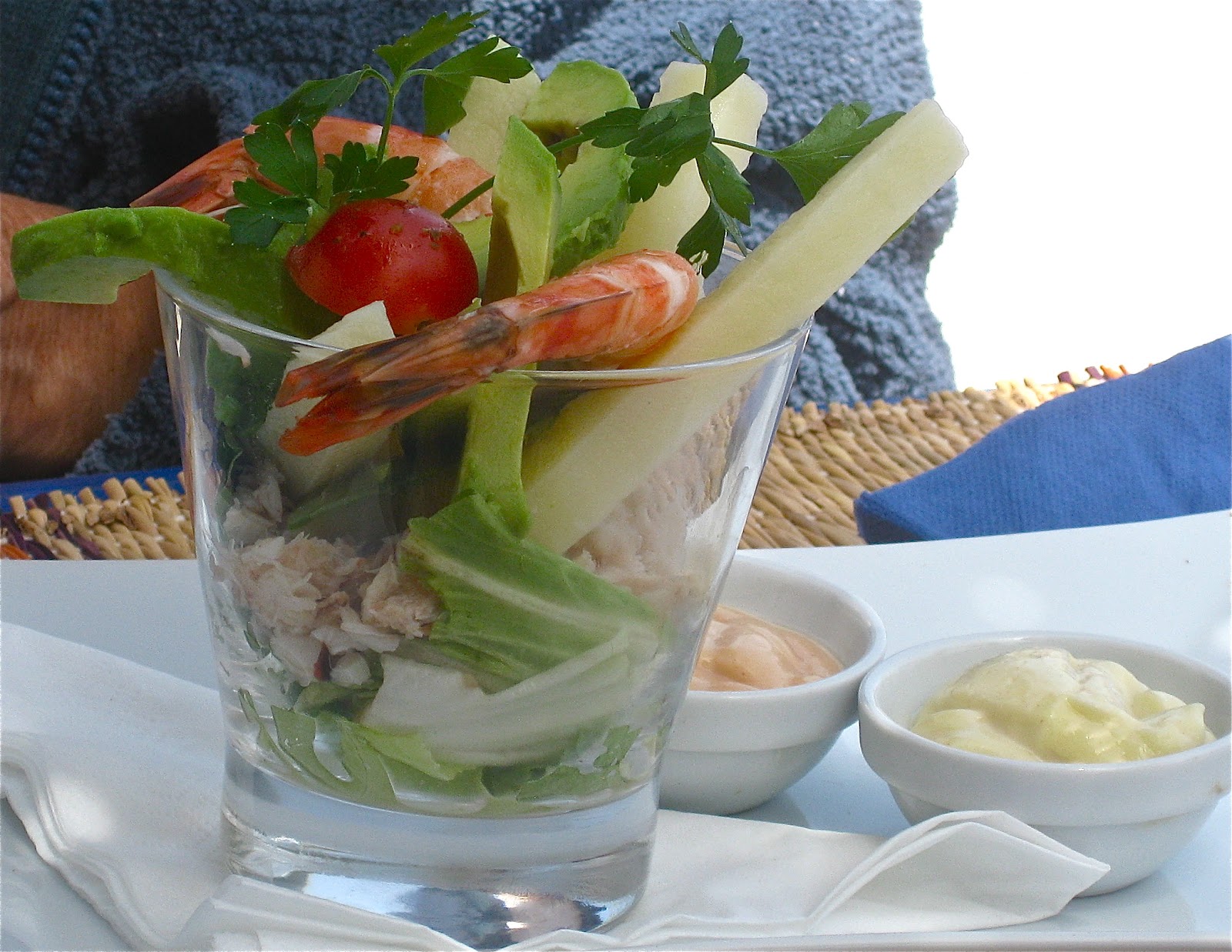
A modern composed seafood salad from a restaurant in Essaouira

 Did I mention salads from my favorite riad in Fes--this time for breakfast?

And even in our camp in the Sahara, an orange salad for dessert

Parting Shot:  Morocco
Moroccan "silk" scarves, made from cactus fiber

©Victoria Challancin.  All Rights Reserved.

Recipes, like life, are meant to be shared, but please ask permission before using my photos or text.  Thanks!