Blog Archive

Showing posts sorted by relevance for query Olives, Preserved Lemons and a Moroccan Tagine. Sort by date Show all posts

Sunday, August 10, 2014

How to Make Preserved Lemons and Use Them


How to Make Preserved Lemons and Use Them
by Victoria Challancin

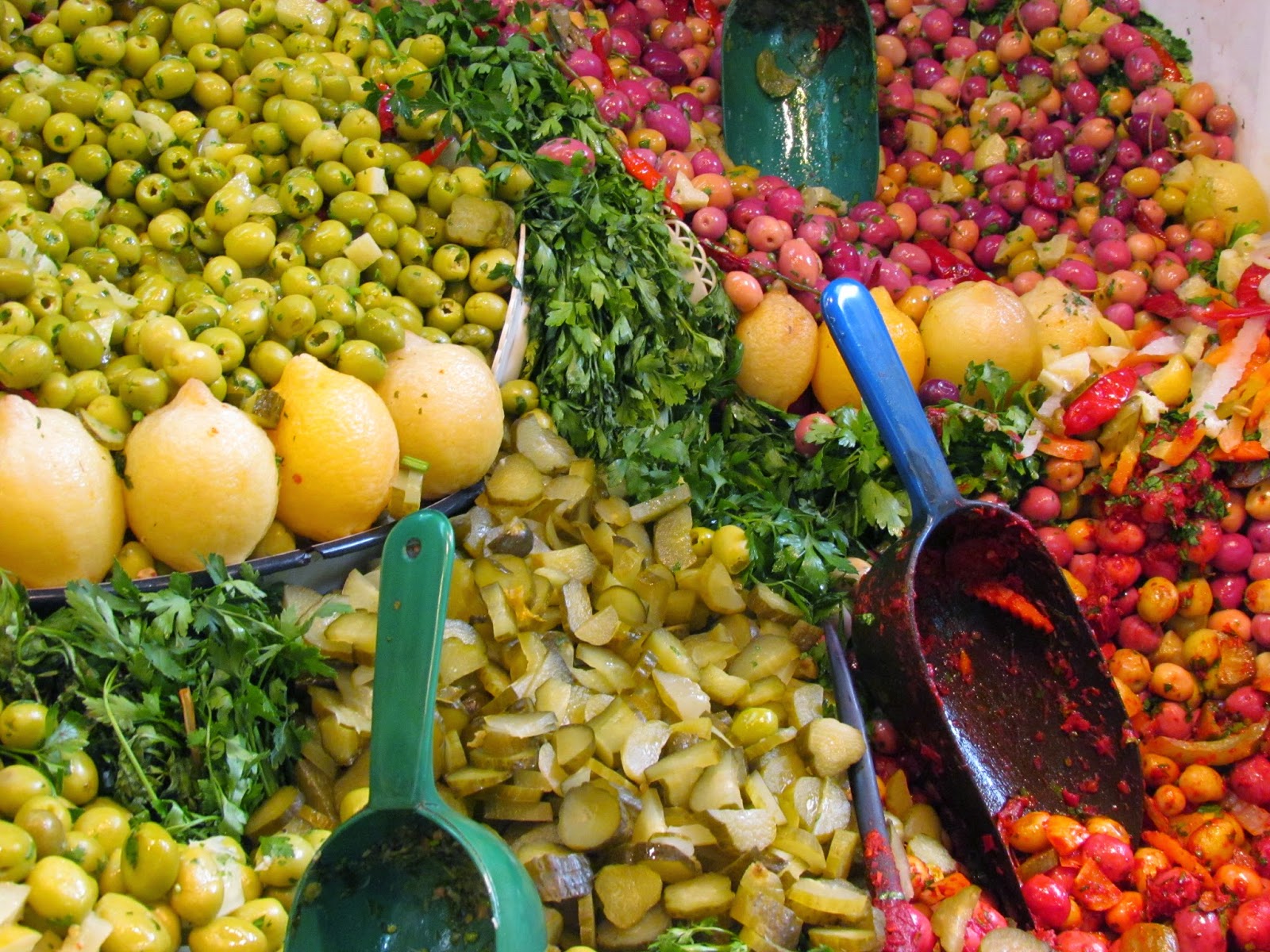
Each year when I lead groups to Morocco, I visit the souks seeking my annual dose of sensual stimulations, always highlighted by a visit to the olives, spices, and preserved lemons.  Every single time, I am dazzled anew.  Every time I seem to literally leave my skin and allow my being to enter a world unknown, a world of colors, sounds, and sights so exotic, yet oddly so familiar--so utterly beautiful that they almost take my breath away.  Truly, I do not exaggerate.  And words seem to fail me.

One of the ingredients I love most in Morocco is the preserved lemon.  Common throughout North Africa, where they are used in a variety of tagines, or stews (see my recipe for a Chicken Tagine with Green Olives and Preserved Lemon, a Moroccan classic), just a little bit of these salt-cured beauties adds an intense citrus kick and subtle lemon nuance to a variety of dishes.  And for those who do not have access to year-round citrus, they satisfy that yen for a bright citrus note, even when lemons are out of season.  For my readers in San Miguel this is an especially nice bonus as, although we have limes available all year, Eureka lemons are a relatively new item here and the availability is sporadic at best.

A Bit of History
Throughout history, pickling has been both a practical and economic way of preserving food. Although in our modern world preserved lemons often considered to have a North African provenance, citrus is commonly preserved in many other diverse cultures as well.  In Cambodia whole preserved lemons are often added to a soup called ngam nguv.  Chanh muoi, the Vietnamese version using limes (lemons are used in other countries), is often used to make a sort of salty-sweet lemonade with sugar and water or carbonated water.  The lime pickles of the Indian subcontinent are legendary and varied in their preparation, which often includes a spicy oil with lots of chile.  The internet also tells me that lemon pickle is used in Africa as a folk remedy for excessive growth of the spleen!

Hank Shaw, cookbook author and writer of the immensely entertaining and interesting blog hunter.angler.gardener.cook, delves into the history of the preserved lemon a bit more.  He says that the earliest reference in English that he found came from an English cookbook called A New System of Domestic Cooking by Eliza Rundell, written in 1808.  And in Little Women, a childhood classic and favorite of mine, the barrels of pickled limes mentioned there referred to Florida key limes shipped north even during the Civil War era.  Mrs. Bradley's Housekeeper's Guide (1860) suggests salting quartered lemons and allowing them to dry in the sun for days, until leathery, then packing them into jars with ginger and vinegar, and waiting for at least 6 months to use them.

Shaw [thank you, Hank, for this wonderful research that I am paraphrasing here] also tells us that lemons are boiled in Sri Lanka until they split, then are stuffed with salt and submerged in vinegar. Later, six months later to be exact, they are minced with shallot and chiles to be served with rice or curry as a sort of exotic gremolata.  Russians also submerge lemons in brine, to be used after some months sliced thinly to be served with wild game.  

Going back in time even further and using a method similar to the standard Moroccan version, Shaw tells us that the Greeks began by preserving citrons and by the 1st century had also begin to preserve the lemons they brought from Persia.  Both the Chinese and East Africans preserve lemons as well. Ibn Battuta, my favorite traveler of all time, reported in 1325 that he ate preserved lemons in Somalia, leaving Shaw to wonder if he had brought the recipe back to his native Morocco at that early date!


                How to Make Moroccan Preserved Lemons
There are countless recipes and variations for making preserved lemons online.  In one earlier post titled "Olives, Preserved Lemons, and a Moroccan Tagine" In this post I even give a recipe for Quick Preserved Lemons by Kitty Morse, a cookbook author who was born and raised in Morocco.  Note that the quick-fix version, while giving you something to use in a pinch, lacks the depth of flavor and nuance that makes preserved lemons so special.


Recipe:  My Version of Moroccan-Style Preserved Lemons

To make my version of Moroccan-style preserved lemons, I use Eureka lemons because I like the flavor and because they are available.  Some people like the sweetness of Meyer lemon.  Scrub the lemons first, cut off the tips, partially quarter the lemons lengthwise, leaving them intact at the stem base.  Pack with Kosher or sea salt (not iodized table salt, which alters both the texture and the flavor). Place them in a sterilized jar, using a sterilized tool such as tongs.  Smush the lemons down into the jar, squeezing out the juice as you push.  Fill the jar and add additional salt and more lemon juice if your lemons aren't juicy enough to produce enough juice to cover the lemons.  After a day or two, you can add more lemons, using sterilized tools, of course.  It is just that simple.  Now you just have to wait 4 or 5 weeks to allow them to cure.  

Variations:  I have made them with the addition of spices such as bay leaves, cardamom, black pepper, but I actually prefer the simple method which I outlined above.  I also noted that Yotam Ottolenghi, by favorite chef of all time, uses rosemary and chile in his version--I've not seen that elsewhere, but can imagine that they would yield an interesting flavor.  Other ingredients I have seen include, turmeric, sugar (why?) turmeric, coriander seeds, cloves, fresh ginger, garlic, white wine vinegar
Tips for Using Preserved Lemons
  • Rinse the salted lemons before using
  • Remove pith and pulp using a spoon and cut the rind into small pieces, small cubes or narrow strips.  Sometimes in cooking classes I have taken in Marrakech, the pith and pulp are also used.  To me the best of the flavor is in the rind as it contains the flavorful lemon oil.  Also, because these are such a salty ingredient, it will take a little practice to understand just how much to use, hence it is easier to eliminate the pulp and pith--up to you.
  • Don't worry if the lemony liquid in the jar thickens with time.  This is both normal and desirable.
  • Apparently, if the lemons darken somewhat, it is a good thing.  My instinct is to go for the most lemony-yellow color when making or buying, but Gemma of Souk Cuisine assures me the lightly browner ones are the most delicious.  I wish I had known that before I tossed my last batch when they looked less than a perfect, bright yellow!
  • Sometimes a white film will appear on the lemons.  This can simply be washed away.
  • Use a clean utensil to remove lemons from the prepared batch as your hands would contaminate the remaining lemons.
  • Make sure your lemons stay submerged in the liquid in the jar.
  • Some recipes suggest lightly blanching the preserved lemon before using to bring out the natural sweetness, however, I have never done this.
  • If the color or flavors change noticeably (in an unpleasant way, of course) over time, discard them and start again
  • Be sure to reduce the salt in a recipe using preserved lemons, or at least check before adding salt
  • Be adventurous and use a bit of preserved lemon in any recipe that might call for regular lemons, just use discretion as they are intensely flavored and intensely salty!


Preserved lemons are to fresh ones what cured salami is to fresh meat.  No they are not fresh, but they are just as good, if not better.  It is a different taste and sensation.  Funkier, more mellow.


Need Inspiration?

Traditional and Non-Traditional Uses for Preserved Lemons:

Some of the ways I have used preserved lemons in my kitchen:
  • In a traditional Moroccan tagine, where I first learned to love them.  See my recipe here.
  • With purchased mayonnaise and lots of garlic to make an aioli
  • In a vinaigrette
  • In a beurre blanc to serve with seafood
  • In tuna salad
  • In tapenade
  • In gremolata
  • In hummus
  • In guacamole
  • In a Caesar Salad
  • In pesto
  • In lentil soup
  • With capers and artichokes over chicken paillards with a touch of white wine
  • In a Mediterranean-style quinoa salad.  Actually, I have used them minced into many grain salads, including tabouleh
  • In a non-traditional Mexican tomato-tomatillo salsa
Some of the ways I have seen them used online:
Note:  I apologize for the lack of links here.  When I made my first batch of preserved lemons some years ago, I looked online for inspiration, without copying down the recipes.  I just noted the names of the recipes to be used either as a suggestion for me to create my own version, or to be looked up later.  If any appeal, I am certain a Google Search will yield immediate results.  If I know the source, I will give it.

  • Roasted Tomato and Preserved Lemon Sauce
  • Zesty Salsa with Preserved Lemons
  • Roast Chicken with Preserved Lemon and Braised Vegetables
  • Moroccan-Flavored Pork Ragu (sounds good even if Moroccans do't eat pork!)
  • Preserved Lemon Cocktail (Eat Boutique)
  • Use them on pizza
  • Make a condiment by blending them with olive oil
  • Pizza with Za'atar, Preserved Lemons and Ricotta
  • Toasted Orzo with Preserved Lemon, Pine Nuts and Currants (A New Way to Cook)
  • Bake fish in foil or parchment with preserved lemon and fresh herbs
  • Add to cooked vegetables
  • Add to chili
  • Add to a sweet potato salad
  • Add to seafood risotto (or vegetable risotto--or any other)
  • Add to marinades
  • Make a compound butter and add tiny minced pieces of preserved lemon and herbs--and garlic
  • Add to a Greek Salad (the flavors are perfect with feta and black olives)
  • Preserved Lemon Semifreddo with Basil Syrup
  • Pureed Preserved Lemons (Food in Jars)
  • Strozzapreti with Spinach and Preserved Lemon (Bon Appétit)
  • Baked Chicken with Artichokes, Cinnamon, and Preserved Lemons (The Kitchn)
  • Leeks with Preserved Lemons and Tarragon (MJ's Kitchen)
  • Grilled Bread with Thyme Pesto and Preserved Lemon Cream (Food52)
  • Rice Salad with Merguez and Preserved Lemon Dressing (Food & Wine)
  • Marinated Mozzarella with Preserved Lemon and Basil (Donna Hay)
  • Pasta with Preserved Lemon and Roasted Garlic  (ryanbros)
  • Fettuccine with Preserved Lemon and Roasted Garlic
  • Cauliflower Couscous with Preserved Lemons
  • In a Bloody Mary
  • Preserve Lemon Relish (with dill and shallots--from Simply Recipes)
  • Toasted Kale and Pan-Fried Chickpea Salad
  • Preserved Lemon Quinoa with Shaved Brussels and Toasted Walnuts
  • Artichokes with Parsley and Preserved Lemon Pesto
  • Nectarine and Sweet Onion Salad with Preserved Lemon Dressing
  • Israeli Couscous with Roasted Butternut Squash and Preserved Lemon (Gourmet)
  • Pernod Shrimp
  • Preserved Lemon Hummus
  • Preserved Lemon Rice
  • Chicken Braised with Preserved Lemons and Cinnamon
  • Preserved Lemon Rice
  • Salmon Quiche with Preserved Lemons
  • Preserved Lemon Caesar Salad
  • Roasted Pepper, Tomato, and Salted Lemon Relish (Kitty Morse, Moroccan Cusine)
  • Parmesan, Preserved Lemon, and Thyme Wafers
  • Lemon Tossed Salad
  • Chicken, Nice Style (Babs in Toyland)
  • Tabbouleh Wrapped in Romaine Leaves
  • Pine Nut and Preserved Lemon Couscous (Emeril Lagasse)

Moroccan-Style Recipes Using Preserved Lemon:
Note:  Check out about.com  Moroccan Food for great and authentic Moroccan recipes (many of these are from that site).

  • In a tagine with chicken and lavender tagine olives (I mentioned this one earlier, but it THE classic recipe for using preserved lemons)
  • With a leg of lamb
  • With snapper and fennel
  • Marinated Quail, Chicken, and/or Duck with Preserved Lemons and Harissa
  • Shrimp with Preserved Lemon
  • In a Carrot Salad (cooked or uncooked, Moroccan-Style)
  • Spicy Potato Tagine with Preserved Lemon and Olives (Paula Wolfert via epicurious)
  • Moroccan Meatballs with Preserved Lemon (Kirsten's Kitchen to Yours)
  • Moroccan Butternut Squash Chickpea Stew (Use Real Butter)
  • Chickpea and Tomato Tagine (Kirsten's Kitchen to Yours
  • Moroccan Grilled Chicken with Preserved Lemon
  • Couscous with Mint and Preserved Lemons
  • Root Vegetable Couscous with Preserved Lemon
  • Moroccan Fish Tagine
  • Moroccan Style Cauliflower
  • Spinach Salad with Preserved Lemon and Olives (Christine Benlafquih)
  • Djaj (Chicken) Souiri (Christine Benlaquih)
  • Tagine of Chicken with Fennel
  • Lamb with Cabbage
  • Beef or Lamb Tagine with Carrots
  • Tagine with Fava Beans and Artichokes
  • Brain with Preserved Lemons
  • Tangia
  • Salade Mechouia
  • Chicken with Nigella Seeds
  • Chicken with Potato and Olives
  • Moroccan Fava Bean Salad with Olive Oil and Spices
  • Tagine of Lamb, Peas, Potatoes and Zucchini
  • Lamb with Eggplant
  • Lamb with Cauliflower or Green Beans
  • Chicken Mezgueldi
  • Moroccan Artichoke Salad
Note:  These darker lemons are preferred by Gemma, owner of the cooking school Souk Cuisine in Marrakech  (see my post here on a fun and informative class I took there last April).


Like what you see?  Join me in April 2015 on one of my tours to Morocco.

Parting Shot:  My Own Latest Batch 
 A recent batch of Eureka lemons I put up about six weeks ago, now ready to use!

Want to join me next April in Morocco?  Contact me by email for more information.


©Victoria Challancin.  All Rights Reserved.
Please ask permission before using photos or text.

Victoria Challancin
Flavors of the Sun Cooking School and Trips
San Miguel de Allende,
México 

Monday, June 4, 2012

Olives, Preserved Lemons, and a Moroccan Tagine

Moroccan "tagine" olives

Olives, Preserved Lemons, and a Moroccan Tagine
by Victoria Challancin

What exactly is a tagine, you might ask?  A tagine is the name of an earthenware cooking dish with a tall, conical lid, used throughout North Africa.  It is also the name of any meat or vegetables stews cooked in it (think of a French Provençal tian, which is both the name of the cooking vessel and the au gratin vegetable dish cooked in it).  You may remember the tiny "tagines" I showed you on the post I wrote on cumin.

The Cooking Vessel
Tagines are very practical cooking vessels which originated with the Berbers of North Africa.  The harsh constraints of the desert lifestyle requires a pot which needs minimal fuel and precious liquid.  The distinctive dome shape of the traditional earthenware tagines accomplish this efficently.  By using clay (though many other modern materials can now be found), often with a metal diffuser, the heat beneath the pot effectively dissapates and thus reduces the amount of fuel required to cook the dish.  The conical top also aids in this process of economy as all of the rising steam and vapors from the cooking stew accumulate, condense, and fall back into the simmering braise, so that none of the aroma or flavor is lost during the cooking process. The unique design of the tagine makes it a perfect portable, practical, useful dish which fits the needs both the modern cook of today and of the nomadic Berbers of hundreds of years ago.

These traditional tagines contain simmering stews over clay braziers--these at a roadside stand in Central Morocco

The bottom of a tagine is a wide, circular shallow dish used for both cooking and serving.  The top has a tall, conical shape, or a lower rounded one.  Made of clay or even ceramics, the tagines can be basic and utilitarian (what you find in most homes in Morocco) or elaborately decorative, fit for display.  Some of the beautifully decorative pieces are only used for serving, not for the cooking itself.

The vegetables atop the tagine give hints as to what the dish might contain

An individual-serving size tagine at a cooking class in Marrakech--the smaller tagines contain the dried spices used to make the stew (ginger, black pepper, cumin, paprika, turmeric, cinnamon, and black pepper)

A pile of unglazed tagines in the northern city of Chefchaouen--note the different regional styles

Tiny decorative salt and pepper tagines in the coastal city of Essaouira

Examples of the actual base of the cooking vessel in which the stews were cooked, served piping hot right to the table--here we have a vegetable tagine and two with lamb and prunes

The Tagine as Food
In terms of tagines as food rather than pots, there is a wide variety of both traditional dishes and modern interpretations.  Traditional tagines include "sweet"  and savory tagines.  A common example of a "sweet" tagine is lamb with dried fruits such as figs, prunes, dates, or apricots, often sweetened with a touch of honey.  Fresh fruits such as quince, apples, pears also make appearances.  One favorite savory tagine that I actively seek out all over Morocco uses preserved ingredients such as olives and salted lemons as seen in the following recipe.  Nuts such as almonds and walnuts are also commonly included.  Vegetables include tomatoes (yes, I know, it is a fruit...), carrots, potatoes, chickpeas, sweet potatoes, pumpkin, zucchini, green beans, and eggplant.  Mint, parsley, and cilantro are the most common herbs used in Moroccan cuisine.  As for the spices, that is a book unto itself...check out my post on Ras el Hanout

In a Moroccan souk:  Preserved lemons 


One of my personal favorite tagines is Chicken with Olives and Preserved Lemons.  Common throughout Morocco, it can be found on tables humble as well as elegant.  Trust me, I seek it out wherever I travel in the country...as well as duck with figs, rabbit with prunes...oh so many.  But truly,  I love both olives and preserved lemons so much, that this just may be my favorite.  Below is an easy recipe from Tyler Florence that yields good results.  Because I didn't have a jar of preserved lemons on hand (my homemade ones disappear quickly), I used a recipe that you can make in under an hour.  I also had to use imported Spanish green olives instead of the traditional lavender-hued or pink/purple ones called simply "tagine" olives in Morocco.

For more photos and information on olives and the olive harvest in Morocco, I invite you to check out these pasts posts or visit the Travel Blog Section in the drop-down menu with more from Morocco):


The Olive Harvest, Part I  (an introduction)
The Olive Harvest, Part II (the pressing of the olives)
The Olive Harvest, Part III (the processed olives)
A Cooking Class at La Maison Arabe in Marrakech (with a photo of this same chicken tagine with olives and preserved lemons)


An olive and preserved lemon display from the Fez, or Fes, souk


Cook's Notes:  Do these preserved lemons taste like the real things, which are left to season for a month or more?  Absolutely not.  They lack the depth of flavor, the subtleties, the softness of properly preserved salted lemons.  Are the an acceptable substitute?  Yes, in a pinch.  If I don't actually preserve some lemons soon (I do this periodically), then I might next try Mark Bittman's Quick Preserved Lemons which seem to me to be more of a confit than what you find in Morocco.  Bittman's version uses both salt and sugar, which might soften the edge a bit.  Whichever version you choose, start with unwaxed lemons, either Eureka or Meyer types.  If they are waxed, blanch them in boiling water for about 20 seconds, then rub them with a towel to remove the wax.  Kosher salt works best here, but if you use regular table salt, use less.  If you want to make proper Moroccan Preserved Lemons, just check online as there are countless versions.

Recipe:  Quick Preserved Lemons
(Recipe by Kitty Morse for Cooking LIght)

1 cup water
2 tablespoons kosher salt
2 lemons, washed and quartered

Combine water and salt in a small saucepan; bring to a boil.  Add lemons; cook 30 minutes or until liquid is reduced to 1/2 cup and lemon rind is tender.  Remove from heat; cool to room temperature.


Chicken Tagine with Green Olives and Preserved Lemons

Cook's Notes:  This is a nice version of a classic dish.  If you can find the purple "tagine" olives, by all means use them.  Ditto for preserved lemons, should you have access to lemons preserved for a lengthy time. Do remember to remove the bay leaves, as they can actually cut the esophagus if accidentally chewed and swallowed. 

Recipe:  Chicken Tagine with Green Olives and Preserved Lemons
(Adapted slightly from a Recipe from Food Network, Tyler Florence, Moroccan in Miami)
Serves 4 to 8
1 cinnamon stick
1 teaspoon whole black peppercorns
1 teaspoon cumin seeds
1 teaspoon sweet or hot paprika
1 teaspoon red pepper flakes
1 teaspoon whole cloves
3 tablespoons extra-virgin olive oil, plus more for frying
4 garlic cloves, sliced
1 teaspoon chopped fresh ginger
1 handfull fresh cilantro leaves, chopped
2 bay leaves
1 large pinch saffron
1 (3 1/2 to 4 pound) free-range chicken, cut into 10 pieces
Kosher salt and freshly ground black pepper
1 medium onion, coarsely chopped
1 preserved lemon (see the recipe)
1/2 cup cracked green olives
1 cup chicken stock


A mise en place of spices for this dish

In a skillet over medium heat, toast the cinnamon, peppercorns, cumin paprika,red pepper flakes,and cloves until they become fragrant.  Remove from the heat and grind in a spice grinder.

In a bowl large enough to accommodate the chicken, add the oil, spice mix, garlic, ginger, cilantro,bay leaves, and saffron.  Mix to a paste.  Add chicken, rubbing the marinade, olives,and chicken stock. Cover and refrigerate for 2 hours or overnight.

Remove the chicken from the marinade and reserve marinade.  Pat chicken dry and season with salt and pepper.  In a tagine or large casserole over medium high heat add 2 tablespoon olive oil.  Put in chicken pieces and lightly brown on both sides, about 5 minutes.  Add onions and cook until just starting to brown,about 3 minutes.  Rinse preserved lemon well.  Scoop out flesh and discard; cut peel into strips and add to pan.  Add reserved marinade, olives,and chicken stock.  Cover tightly and cook over medium low heat for 30 to 35 minutes, or until chicken is cooked through.  Remove bay leaves and discard.  Taste juices and adjust seasoning.  Place chicken on a warm platter.  Spoon juices with the preserved lemon, olives,and onions over chicken and serve immediately.


Another version of the same recipe

 The mise en place of spices for the second version


All you need for this tagine, in the souk of Meknès


Like what you see?  Join me in Morocco in fall of 2012 or spring of 2013 on my small-group trips.  Contact me at flavorsofthesun@gmail.com for information


Parting Shot:
From a cooking class at La Maison Arabe in Marrakech on one of my trips to Morocco


©Victoria Challancin.  All Rights Reserved.

Like life, recipes are meant to be shared, but please ask permission before using photos or text.  Thanks!


Monday, June 8, 2015

A Yearly Cooking Class at La Maison Arabe--with a Recipe!


A Yearly Cooking Class at La Maison Arabe--with a Recipe!
by Victoria Challancin

I'm back!  I'll spare you the apologies, the whinging, the explanations, but I do hope I have returned to the world of blogging after a lengthy absence.  Happily so!

Many of my readers know that I lead small groups to Morocco each year.  Some of you might ask exactly "why?"  I posted a simple explanation, yet in my eyes, a perfect explanation, in a sort of photo essay in 2010 and I don't think I can improve on the sentiments I expressed there.

Why Visit Morocco--please check it out and see if helps you understand my love of this culture, country, and its wonderful people.


Although my tours are not culinary tours, as a part of our itinerary on the trips I lead, we take a cooking class at the spectacular luxury riad (really, this is a boutique hotel) La Maison Arabe, which offers its cooking workshops in private gardens just fifteen minutes outside of Marrakech.  Complete with an organic kitchen garden, an outdoor wood-fired bread oven, and a thoroughly modern cooking school which has 16 individual work stations--each equipped with a closed-circuit screen, the hotel has created a perfect cooking school.  And yes, I admit to being just a tad envious... From the comfort of his or her own station, the participants can watch the dada, or traditional Moroccan family cook, who might be descended from Sub-Saharan slaves or who at least holds a place of respect as the family cook, as she leads us at a brisk pace through our cooking journey.

The Physical Space


Terra cotta tajines used to prepare individual portions and an array of the most common spices used in Moroccan cooking

Two adjacent cooking stations with plastic-covered chicken ready to be prepared


Older Posts on Moroccan Cooking
Cooking at the Kasbah:  A Cooking Class at La Maison Arabe (the original cooking school)

Olives, Preserved Lemons, and a Moroccan Tagine--plus a terrific recipe for a Chicken Tagine with Green Olives

On a Moroccan Table--general info about Moroccan food


The Food and Our Menu

Here we participate in the making of a bread called tanourt, or tannour, baked in an oven also called a tannour (probably from  the Hindi "tandoor").  After we prepare it, we are shown how to make traditional Moroccan mint tea.  And of course, we blissfully eat the warm bread with olive oil, argan oil, and amlou, a delicious Moroccan dip made from toasted almonds, argan oil, and honey.  Unfortunately, most of my photos of this were mysteriously deleted (along with 1500 others) from my camera when I tried to put them on my desktop Mac.  Argh...

I always proudly write my name on the name tag in my child-like Arabic, which always elicits a smile from the locals--and not a small amount of surprise

Our main dish, individually prepared:  Tagine M'darble 

Our main dish with two side salads:  Tatouka and Zalouk

This particular dish is rich, with an unctuous sauce sizzling with gentle spices plus the depth of the caramelized onions.  And it is really, really simple to prepare.  One of the things that fascinates me about much of Moroccan cooking that you often don't sauté the chicken or meats at all; rather they are braised in a simple water-based sauce redolent with simple spices.  This technique couldn't be easier!

Recipe:  Tagine M'darble
(Recipe from La Maison Arabe's cookbook, Moroccan Cooking:   Our Dadas' Recipes)

For the chicken:
500g/1lb chicken pieces (boneless breasts or legs/thighs with bones)
1 large onion, finely chopped
1 small bouquet garni of parsley and cilantro
1 tablespoon olive oil
1 tablespoon vegetable oil
Water
1 teaspoon salt
1/2 teaspoon black pepper
1 teaspoon ground ginger
1 teaspoon ground turmeric
1 teaspoon ground cinnamon
A pinch of saffron threads

For the Caramelized Tomatoes:
2 kg (4.5 lbs) tomatoes
1 lb/500g white sugar
1 teaspoon vegetable oil
1/2 teaspoon ground cinnamon
A pinch of salt

Garnish:  Toasted sesame seeds

To prepare the chicken:  
Drizzle the olive and vegetable oil in a tagine, casserole, or large heavy pot.  Add the chicken, the spices for the chicken, and 1/4 cup of water.  Mix well

Add the finely chopped onion to the pot.  Cover the pot and cook the chicken on low heat for 15 minutes.  Turn the chicken over from time to time and add a bit of water if necessary.

Add 1/2 cup cold water and the bouquet garni of parsley and cilantro.   Cover, increase the heat to medium high, and bring to a boil.  Cook, covered, for 30 minutes or until the chicken is very tender.  Check from time to time and add water if the dish seems too dry.  There should always be a cup of sauce in the pan.

Once the chicken is done, uncover the pot, and continue cooking for a few minutes, until the sauce slightly thickens.

Note:  before serving, remove and discard the bouquet garni of parsley and cilantro

To prepare the tomatoes:
Cut the tomatoes in half and remove the seeds.  Grate the tomatoes on a box grater  and discard the skin.  Place the tomatoes in a large saucepan.  On low heat, cook the tomatoes, covered, for 15 minutes.  

Add the vegetable oil, sugar, cinnamon, and salt to the tomatoes.  Mix well.

Cook uncovered on low heat until the tomatoes become caramelized and thick, 45 minutes to 1 hour.  Stir from time to time.

To serve:  Place the chicken on a dish (or leave it in a tagine, if using), top with some of the sauce from the chicken, Add a dollop of the caramelized tomatoes, and finish by sprinkling with toasted sesame seeds.

Variation:  
Replace the tomatoes with pumpkin.  Wrap the pumpkin pieces with plastic wrap and microwave them for 15 minutes or until they become soft.  Caramelize the pumpkin following the same directions as for the tomatoes.


The wine tasting is optional, but I ask you:  Would I miss that???? Moroccan wines are phenomenal.  


Although we students didn't actually prepare this dessert of millefeulle with pastry cream, orange blossom water, almonds, and a phyllo-type dough, we happily enjoyed it.  The recipe calls it "Milk Pastilla"


Note:  As I come kicking and screaming into the world of social media, I am happy to say that many of my photos from this trip can be seen on Instagram (vchallancin) or my new Flavors of the Sun Facebook page...a work in progress as I learn the ropes!


My Tours to Morocco:
Come join me for my 16-day tour of Morocco in October or next April!  (The next tour will be my twelfth to lead there!)


Parting Shot:  
A sideways photo of favorite tagines in the souk, too heavy to bring home


Victoria Challancin

Flavors of the Sun Cooking School and Tours
San Miguel de Allende, Mexico

©Victoria Challancin.  All Rights Reserved.